Sustainability

Ultra-Low CO₂ Aluminum Wheels

A Strong Partner for Cost-Effective, Sustainable Mobility

Vehicle manufacturers and suppliers share a responsibility to address climate change, reduce value-chain emissions and improve resource circularity. Because wheel production is energyintensive and material-dependent, wheels are a key priority in this transition. One of Maxion Wheels’ 2030 goals is to significantly increase the share of sustainable and recycled materials used in wheels.

Moving toward a circular economy means reducing primary raw material use, eliminating waste and keeping automotive-grade wheel materials in use for longer.

2023 Pilot Program: Starting the Transformation in Aluminum

In 2023, Maxion Wheels launched two pilot programs to reduce the CO₂-equivalent emissions of two existing serial-production light-vehicle wheels — one steel and one aluminum — to the lowest possible level.

A global team from Engineering, Supply Chain, Operations, Sustainability and Marketing began work in February and, by August, demonstrated that pilot wheels could be produced using green materials and processes. The results were announced to the automotive industry at IAA Mobility in Germany.

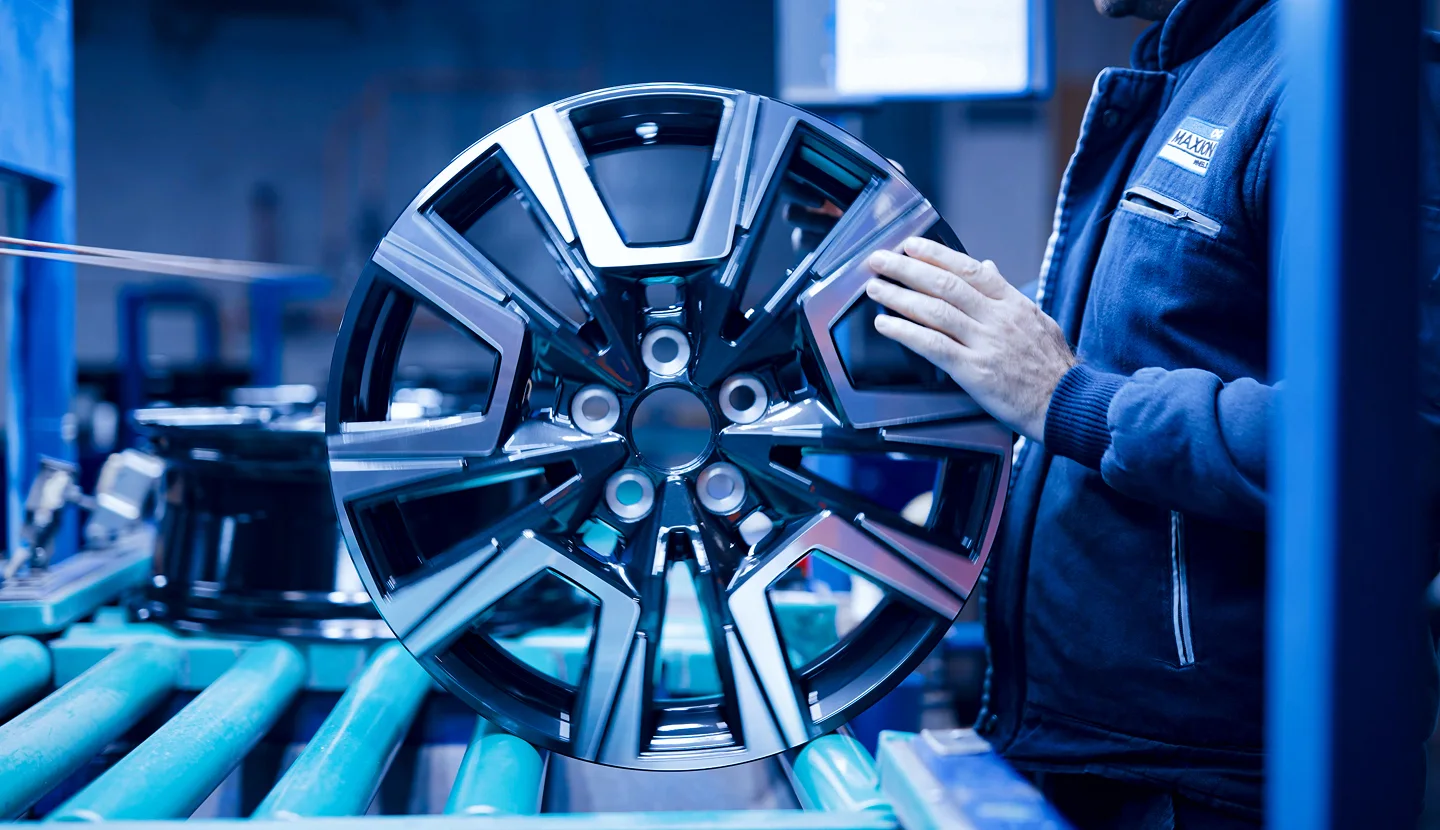
Less Carbon, More Responsibility in Every Wheel

A New Generation Built with Secondary Aluminum

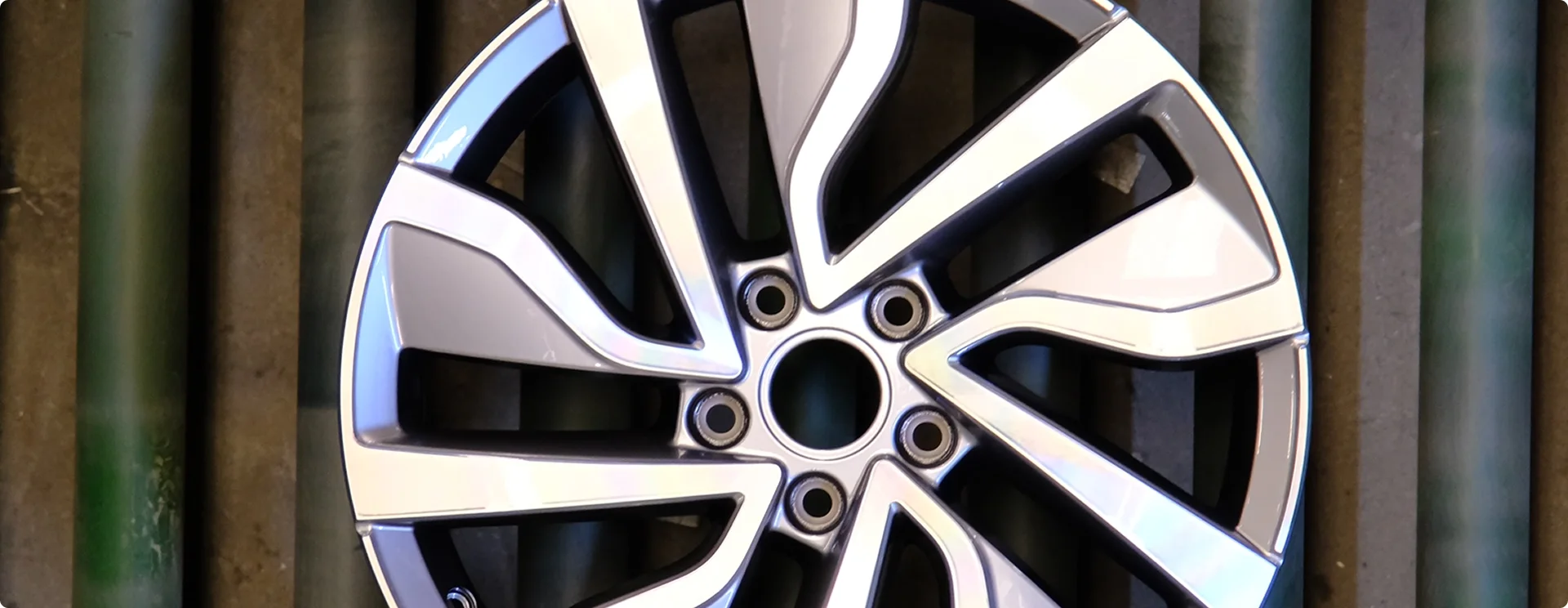
Maxion Wheels’ commitment to sustainable and accessible wheel solutions has led to a new generation of alloy wheels produced with %100 secondary aluminum from fully recycled postconsumer aluminum wheels.

This 15-inch wheel demonstrates both the potential for CO₂ reduction in serial production and the value of circular partnerships. Produced at Maxion’s Santo André facility in Brazil with recycling partners and an energyefficient melting process, the pilot wheels achieved cradle-to-gate CO₂ emissions 62% lower than the same wheel produced with primary aluminum.

Proven Circular Manufacturing Capability

The project used an existing customer design, with the automaker defining the style and technical specifications. Secondary aluminum was obtained by recycling post-consumer alloy wheels, which Maxion Wheels recovered with supply chain partners by separating them from other materials and contaminants.

The wheels were sandblasted, cleaned and then melted to align their chemical composition with OEM standards.

Scalable CO₂ Reduction

Maxion Wheels has mapped the CO₂-equivalent emissions of the recycled-material process to serial production standards. Produced with hydroelectric energy in Brazil, these wheels generate 2.14 kg CO₂ per kilogram of wheel.

By comparison, the same wheel produced with primary aluminum at the same facility generates 5.60 kg CO₂ per kilogram.

The Santo André and Limeira facilities in Brazil are well positioned for sustainable wheel production thanks to their energy mix. Although Scope 1 and Scope 2 profiles differ by region, replacing primary aluminum with secondary material creates a broad sustainability benefit.

Material Selection Is Critical for Net Zero

Renewable energy can reduce a wheel’s CO₂ footprint, but the greatest opportunity lies in emission-intensive raw materials, which account for approximately 75–85% of a wheel’s total CO₂ footprint.

Primary aluminum has the highest CO₂-equivalent emissions, ranging from 3.5 to 25 kg CO₂ per kilogram depending on the energy source.
By comparison, primary steel production emits approximately 2 to 2.5 kg CO₂ per kilogram.

While steel offers a lower-carbon alternative in the short term, long-term solutions are still needed for mobility to reach net zero.

Get in Touch

We support knowledge and experience sharing at national and international levels, helping strengthen capabilities and create a foundation for experimentation, innovation and effective planning.

Would you like to collaborate with us or learn more about our work?

Contact